
Rubber Fenders for Quays, Dolphins & Workboats
We manufacture the full range of fixed rubber fenders — bolted to a quay, dolphin, or hull, they absorb berthing energy by deflecting the rubber and spreading the reaction into the structure. The range runs from high-energy super cone and super cell fenders for the largest vessels, through cylindrical and V-arch fenders for general berths, to D-type edge protection and tug boat fenders. We size every fender on berthing energy — balancing energy absorption, reaction force, and hull pressure, then correcting for the rubber grade, temperature, and berthing angle. We have manufactured marine fenders in Qingdao since 2005, under an ISO 9001 quality system with classification-society type approval on request.
The Rubber Fender Range
Rubber fenders split by how much energy the berth needs and how the reaction is controlled. High-energy berths take cone or cell fenders; general berths take cylindrical or V-arch; light edges and craft take D-type or tug fenders. Pick the type that matches your berthing energy and reaction limit, then open its page for sizes and performance.
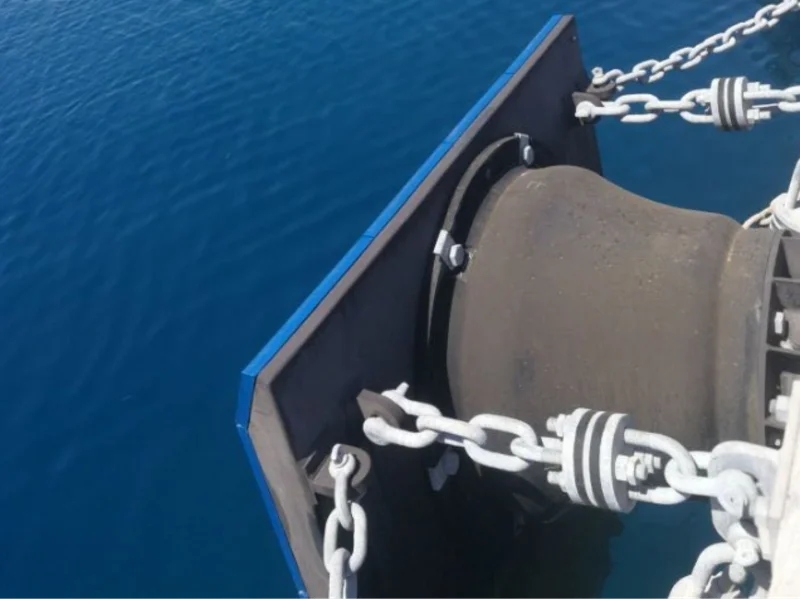
Super Cone Rubber Fender
Tapered cone that absorbs about 70–72.5% of the berthing energy at a low reaction force, stable to a 10° berthing angle.
Use when: a high-energy berth for large vessels needs the most energy at a tight reaction limit.
View Super Cone Rubber Fender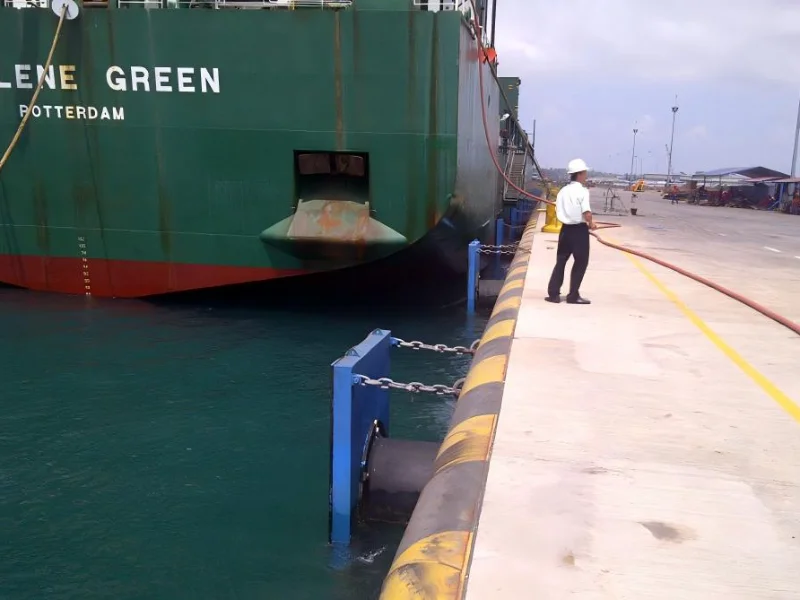
Super Cell Rubber Fender
Cylindrical cell absorbing up to 70% of the impact, offered in five reaction grades (RE–RL) so the reaction can be tuned to the quay.
Use when: a high-energy berth needs the reaction force tuned through the rubber grade.
View Super Cell Rubber Fender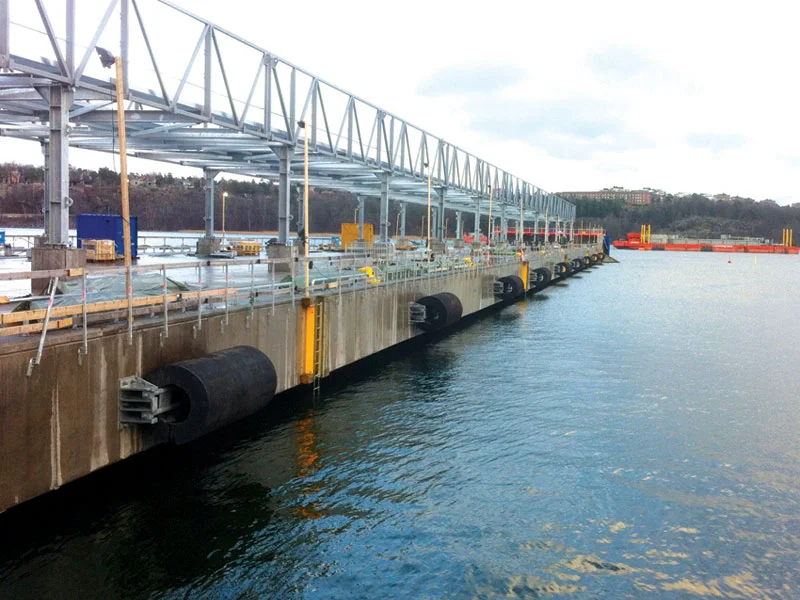
Cylindrical Rubber Fender
Hollow extruded cylinder with a progressive reaction force and a wide contact face, mounted by chain, rod, or ladder fittings.
Use when: a general berth or workboat needs simple, cost-effective protection.
View Cylindrical Rubber Fender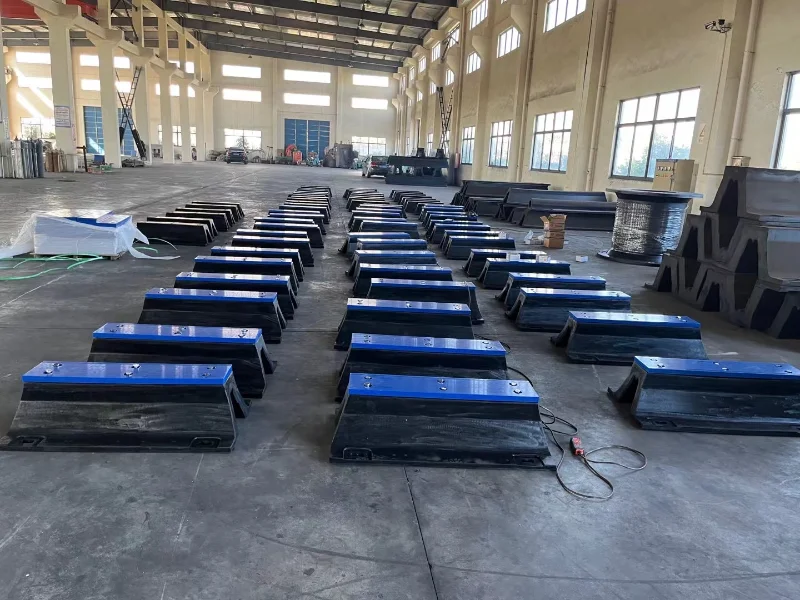
Rubber Fender Type V (Arch)
One-piece arch whose V-groove spreads pressure and lowers reaction, with high longitudinal shear resistance for sliding contact.
Use when: general cargo, RoRo, corners, and pivot points need a low-profile, low-reaction fender.
View Rubber Fender Type V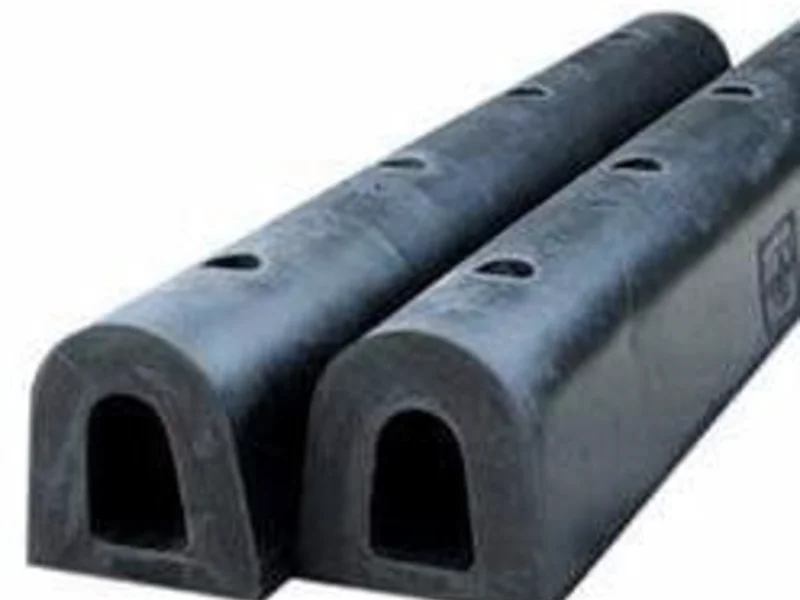
D Type Rubber Fender
Extruded D-section with a flat back and curved face, run continuously along a dock edge — the most widely used dockside protection.
Use when: marinas, pontoons, and edges need light, continuous, low-cost protection.
View D Type Rubber Fender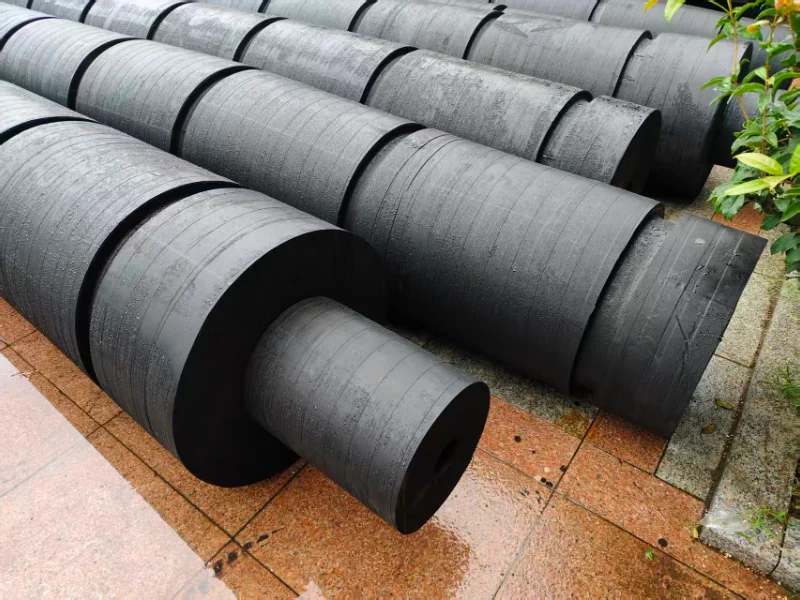
Tug Boat Fenders
Vulcanized rubber for the bow and stern of working tugs, absorbing the hard contact of push and pull at a low reaction force.
Use when: you are fendering the tug itself rather than a fixed quay.
View Tug Boat FendersWhich Rubber Fender for Your Berth?
The choice follows the berthing energy, the reaction force the structure can take, and what you are fendering — a fixed quay, an edge, or the vessel itself. The table compares the range on those terms; we then size the exact type and rubber grade to your numbers.
| Criterion | Super Cone | Super Cell | Cylindrical | Type V (Arch) | D Type | Tug Boat |
|---|---|---|---|---|---|---|
| Energy class | Highest | High | Medium | Medium | Low | By duty |
| Reaction force | Low | Low (5 grades) | Medium | Low | Low | Low |
| Mounting | Bolted + panel | Bolted + panel | Chain / rod / ladder | Bolted, vert/horiz | Bolt-through edge | On the tug |
| Typical berth | High-energy quay | High-energy quay | General / workboat | Cargo / RoRo / corners | Marina / pontoon | Tug bow & stern |
| Profile | Tapered cone | Cylindrical cell | Hollow cylinder | V-arch | D-section | Cylindrical / profile |
Quick routing. Highest energy at a tight reaction → super cone or super cell. General fixed berth → cylindrical or V-arch. Light edge on a marina or pontoon → D type. Fendering a tug → tug boat fenders. If your berth floats with the tide rather than being fixed, a pneumatic fender or foam filled fender is the right family instead.
Not sure which rubber fender fits?
Send the vessel, the berth, and the reaction limit — we recommend the type and rubber grade.
One Engineering Approach Across the Range
Whatever the type, we engineer rubber fenders the same way: the right rubber, sized on the real berth, with the documentation your project needs.
Rubber & vulcanization
High-strength natural and synthetic rubber, vulcanized for resistance to UV, seawater, ozone, and abrasion, tested to ISO methods for a long service life.
Sized on the berth
We size on berthing energy, balancing energy absorption, reaction force, and hull pressure, then correct for rubber grade, temperature, and berthing angle — not a single catalogue figure.
Approval on request
Manufactured under an ISO 9001 system, with classification-society type approval and witnessed test documentation available on request for your scope.
Rubber Fenders — Frequently Asked Questions
What is the difference between a cone and a cell fender?
Both are high-energy fixed fenders. The cone is a tapered unit giving very high energy at a low reaction; the cell is a cylindrical unit offered in five reaction grades so the reaction can be tuned to the quay. We pick between them on the reaction limit and the berth geometry.
How do I choose the right rubber fender?
By the berthing energy, the reaction force the structure can take, and what you are fendering. High energy points to a cone or cell; a general berth to a cylindrical or V-arch; a light edge to a D type; a tug to tug boat fenders. Send us the vessel and berth and we size it.
How are rubber fenders sized?
On berthing energy, typically using a PIANC calculation from vessel displacement, approach speed, and berth type. We then balance energy absorption, reaction force, and hull pressure, and correct the rated figures for the rubber grade, temperature, and berthing angle.
Do you supply floating fenders too?
Yes, but in a different family. Rubber fenders are fixed to a structure; for floating duty that rises with the tide, use a pneumatic fender or a foam filled fender instead.
What approvals are available?
Manufacturing is under an ISO 9001 quality system, and classification-society type approval is available on request. We confirm which approvals apply to your scope and provide the witnessed test documentation your project needs.
Tell us the berth — we pick the fender
Not sure whether you need a cone, a cell, a cylindrical, an arch, a D, or a tug fender? Send us the vessel and the berth and we recommend the type and rubber grade, or point you to the floating fender family if that fits better.
What to send us
5 inputsYou get back: a recommended fender type and rubber grade for your berth, with a link to the exact product page and its performance basis.