
Marine Airbags for Launching, Lifting & Salvage
We manufacture marine airbags built from synthetic tire-cord plies for the heavy work of offshore operations — launching and hauling vessels, lifting and moving heavy structures on land, and refloating sunken or stranded objects by buoyancy. They are an operational tool, not berth protection: inflated under or around a load, they carry large weights at a low, spread reaction. We build to ISO 14409, size every set on the actual operation rather than a catalogue figure, and have manufactured marine airbags in Qingdao since 2005.
The Marine Airbag Range
Marine airbags split by the job: rolling a vessel down a slipway, lifting and moving a heavy structure on the ground, or raising a sunken object by buoyancy in water. Each shares the same tire-cord construction but is sized and rigged differently. Pick the one that matches your operation, then open its page for the bearing-capacity or buoyancy tables.
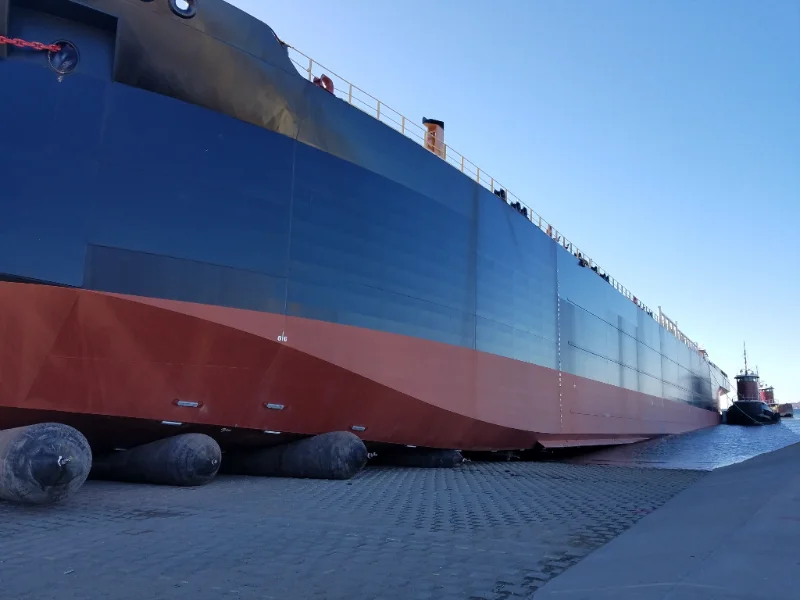
Ship Launching Airbags
Rolled under the hull and inflated to launch or haul out a vessel on a slipway, spreading the load so the hull is not point-loaded.
Use when: you are launching or hauling out a vessel on a slipway.
View Ship Launching Airbags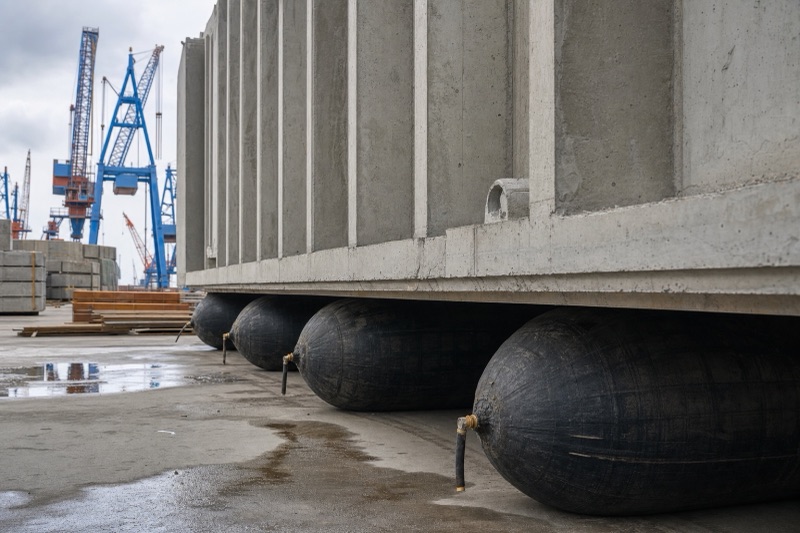
Heavy Lifting Airbags
Low-pressure cushions that lift and move heavy structures — caissons, cofferdams, large sections — at a low reaction force, with a single bag rated up to 1,000 t.
Use when: you are lifting or relocating a heavy structure on the ground.
View Heavy Lifting Airbags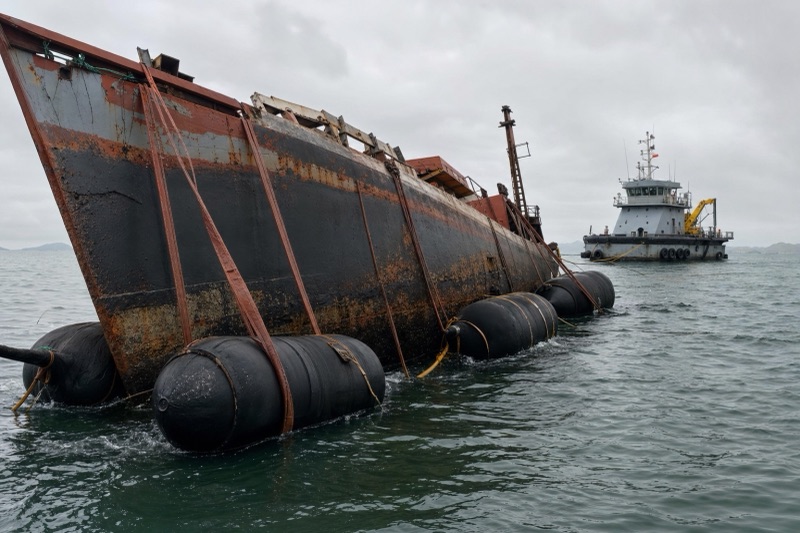
Marine Salvage Airbags
Closed cylindrical buoyancy bags rigged under or around a sunken object, then inflated underwater to raise it by displacing water, sized to a safety factor of at least 6:1.
Use when: you are refloating a wreck or raising an object in water.
View Marine Salvage AirbagsWhich Marine Airbag for Your Operation?
The choice follows the operation — launch, land lift, or buoyancy lift — the medium it works in, and how the load is rigged. The table compares the three on those terms; we then size the type and quantity from your load case.
| Criterion | Ship Launching | Heavy Lifting | Marine Salvage |
|---|---|---|---|
| Job | Launch / haul-out | Lift & move structures | Refloat / raise |
| Works in | On a slipway | On the ground | In water |
| How it carries | Rolls under the hull | Direct load support | Buoyancy (displaces water) |
| Key variable | Total launch weight | Working height | Submerged weight & depth |
| Sizing basis | Layer class & quantity | Bearing capacity × length | Buoyancy at 6:1 safety factor |
Quick routing. Launching or hauling out → ship launching airbags. Lifting a structure on land → heavy lifting airbags. Raising something in water → marine salvage airbags. Airbags are operational tools, not berth protection — to fender a vessel against a structure, use pneumatic fenders, foam filled fenders, or rubber fenders.
Not sure which airbag your job needs?
Send the operation, the weight, and the conditions — we recommend the type and quantity.
One Construction, Sized to the Operation
Whatever the job, we build marine airbags the same way and size them on the real operation — not a catalogue figure.
Synthetic tire-cord construction
Multiple synthetic tire-cord plies between rubber give the strength to carry large loads and hold working pressure; the ply count sets the safe pressure and capacity.
Sized on the operation
We size from the load, the working height or water depth, and how the bags are rigged, with a safety factor — not from the capacity of one bag.
Lower cost than dry docks & cranes
Airbags need less capital and setup than dry docks and heavy cranes, deploy and recover quickly, and reduce the risk of damage to hull and cargo.
Marine Airbags — Frequently Asked Questions
What types of marine airbags do you supply?
Three: ship launching airbags for launching and hauling out vessels, heavy lifting airbags for lifting and moving heavy structures on land, and marine salvage airbags for refloating sunken or stranded objects by buoyancy. All are built to ISO 14409.
How do I choose the right airbag for my operation?
By the load requirements, the environment (including water depth and ground conditions), and the airbag specification needed to match them. Send us the operation, the weight, and the conditions and we recommend the type, size, and quantity.
How do marine salvage airbags work?
They provide buoyancy underwater: rigged under or around a sunken object and inflated, they displace water and raise it. The lift is shared across several bags with a safety factor of at least 6:1, and kept controlled as it rises.
Why use marine airbags instead of dry docks or cranes?
Airbags carry a lower initial investment and lower operating cost, deploy and recover quickly, suit a range of vessel sizes, and reduce the risk of damage to the hull and cargo — where a dry dock or crane is highly specialised and slower to set up.
Are marine airbags the same as fenders?
No. Airbags are operational tools for launching, lifting, and salvage; they are not berth protection. To fender a vessel against a structure, use pneumatic, foam filled, or rubber fenders instead.
Tell us the operation — we pick the airbag
Not sure whether you need launching, lifting, or salvage airbags? Send us the job, the weight, and the conditions and we recommend the type, size, and quantity — sized on your operation, not a catalogue figure.
What to send us
5 inputsYou get back: a recommended airbag type, size, and quantity for your operation, with a link to the exact product page and its capacity or buoyancy basis.