
Sling Pneumatic Fenders for STS & Repositionable Berthing
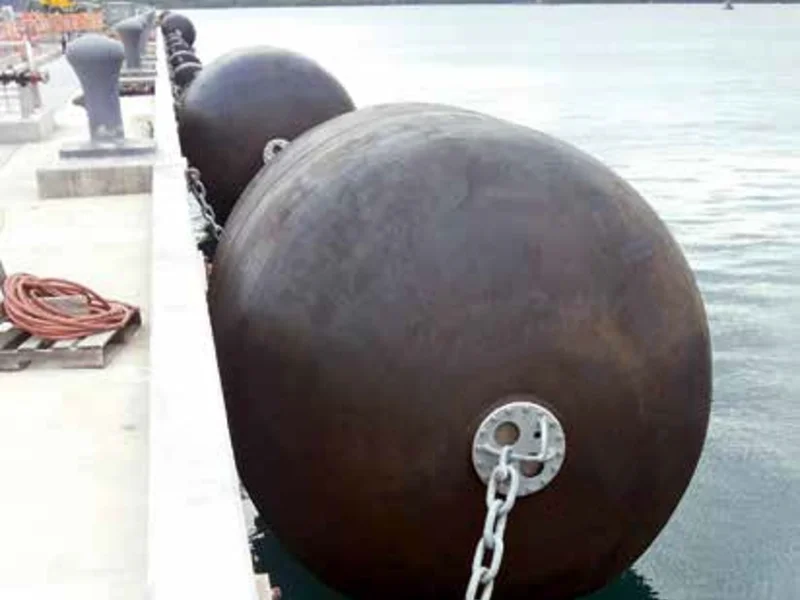
A sling pneumatic fender is a high-pressure floating rubber fender supplied with lifting eyes and slings at each end instead of a chain-tyre net, used for ship-to-ship (STS), ship-to-berth, and temporary berthing where the fender must be redeployed and repositioned frequently. We manufacture these fenders to ISO 17357-1:2014 in the Pneumatic 50 (50 kPa) and Pneumatic 80 (80 kPa) classes, in nominal sizes from Ø500×1000 mm to Ø4500×12000 mm. Founded in Qingdao in 2005, we have produced marine fendering for close to 20 years, with an in-house R&D team and industry-academia collaboration behind the product.
What a Sling Pneumatic Fender Is & Which Operations It Suits
A sling type fender delivers the same energy-absorbing air-cushion as a net-type pneumatic fender but is lighter to handle and faster to redeploy, which suits operators running STS transfers, tender/workboat berthing, or any berth where fenders move between positions on a tidal cycle. The body is a three-layer construction — outer rubber, synthetic tyre-cord reinforcement, inner rubber — with a flange, shackle, and swivel at each end for chain or wire attachment, but without the external chain-tyre net.
Why the suspension hardware matters here. We confirm the lifting-eye configuration and accessory ratings against your handling method before production, because on sling units the suspension hardware carries real operating load and is not an afterthought. This page covers the floating sling variant only — for the net-protected version used against rough or piled quay walls, see our pneumatic fender parent range; for low-pressure, partially water-filled units that keep a submarine hull protected at the waterline, see the submarine fender page.
Pneumatic 50 kPa & Pneumatic 80 kPa Sling Fender Size & Performance Data
The two tables below give Guaranteed Energy Absorption (GEA), reaction force at GEA, and hull pressure, all referenced to 60 ± 5 % deflection per ISO 17357-1:2014; choose the table by the initial internal pressure your berthing case requires. GEA and reaction force are the primary selection figures; hull pressure is the reference value to check against any hull or quay pressure limit. We verify the as-built values against these tables during factory testing and confirm the applicable tolerances for your order.
Read the table by pressure class, not by size alone. Pneumatic 80 kPa raises both reaction force and hull pressure for the same nominal size; Pneumatic 50 kPa is the lower-pressure class for hulls or structures with a tighter allowable pressure. Pick the class from your hull-pressure limit, then read GEA and reaction down the size column.
Pneumatic 50 kPa — initial internal pressure 50 kPa
| Nominal size Ø×L (mm) | GEA (kJ, 60±5%) | Reaction at GEA (kN, ±10%) | Hull pressure (kPa, ref.) |
|---|---|---|---|
| 500 × 800 | 6 | 63 | 130 |
| 500 × 1000 | 6 | 64 | 132 |
| 600 × 1000 | 8 | 74 | 126 |
| 660 × 1100 | 9 | 76 | 128 |
| 700 × 1000 | 17 | 137 | 130 |
| 700 × 1500 | 17 | 137 | 135 |
| 800 × 1200 | 21 | 162 | 132 |
| 1000 × 1500 | 32 | 182 | 122 |
| 1000 × 2000 | 45 | 257 | 132 |
| 1000 × 3000 | 67 | 385 | 146 |
| 1150 × 1800 | 44 | 273 | 116 |
| 1200 × 2000 | 63 | 297 | 126 |
| 1350 × 2500 | 102 | 427 | 130 |
| 1500 × 2000 | 108 | 400 | 131 |
| 1500 × 2500 | 134 | 499 | 131 |
| 1500 × 3000 | 153 | 579 | 132 |
| 1500 × 3500 | 179 | 675 | 145 |
| 1700 × 2000 | 128 | 426 | 148 |
| 1700 × 3000 | 191 | 639 | 128 |
| 2000 × 2200 | 193 | 550 | 136 |
| 2000 × 2500 | 220 | 625 | 142 |
| 2000 × 3000 | 265 | 750 | 145 |
| 2000 × 3500 | 308 | 875 | 128 |
| 2000 × 4000 | 352 | 1000 | 148 |
| 2500 × 3000 | 497 | 1035 | 147 |
| 2500 × 4000 | 663 | 1381 | 137 |
| 2500 × 4500 | 771 | 1651 | 145 |
| 2500 × 5000 | 857 | 1835 | 152 |
| 2500 × 5500 | 943 | 2019 | 148 |
| 3000 × 4500 | 1221 | 2180 | 145 |
| 3000 × 5000 | 1357 | 2422 | 142 |
| 3000 × 6000 | 1293 | 2906 | 157 |
| 3300 × 4500 | 1175 | 1884 | 158 |
| 3300 × 6000 | 1675 | 2783 | 161 |
| 3300 × 6500 | 1814 | 3015 | 158 |
| 3300 × 10600 | 3067 | 5257 | 158 |
| 3500 × 4500 | 1715 | 2849 | 142 |
| 3500 × 5500 | 1816 | 3015 | 145 |
| 3500 × 6500 | 2477 | 4112 | 152 |
| 4500 × 9000 | 4845 | 5988 | 175 |
| 4500 × 12000 | 6473 | 7984 | 154 |
Pneumatic 80 kPa — initial internal pressure 80 kPa
| Nominal size Ø×L (mm) | GEA (kJ, 60±5%) | Reaction at GEA (kN, ±10%) | Hull pressure (kPa, ref.) |
|---|---|---|---|
| 500 × 1000 | 8 | 85 | 174 |
| 600 × 1000 | 11 | 98 | 166 |
| 700 × 1500 | 24 | 180 | 177 |
| 1000 × 1500 | 45 | 239 | 160 |
| 1000 × 2000 | 63 | 338 | 174 |
| 1200 × 2000 | 88 | 390 | 166 |
| 1350 × 2500 | 142 | 561 | 170 |
| 1500 × 3000 | 214 | 761 | 174 |
| 1700 × 3000 | 267 | 840 | 168 |
| 2000 × 3500 | 430 | 1150 | 168 |
| 2500 × 4000 | 925 | 1815 | 180 |
| 2500 × 5500 | 1317 | 2653 | 195 |
| 3300 × 4500 | 1640 | 2476 | 171 |
| 3300 × 6500 | 2532 | 3961 | 191 |
| 3300 × 10600 | 4281 | 6907 | 208 |
| 4500 × 9000 | 6633 | 7551 | 192 |
| 4500 × 12000 | 9037 | 10490 | 202 |
Fenders of 2500 mm diameter and above are fitted with a safety valve as standard, per our production specification. The lower 0.5–0.8 bar (50–80 kPa) class figure is a real working pressure, not a near-atmospheric value, and the air-side fittings are rated accordingly. GEA and reaction figures are verified against these tables during factory testing.
Have your design-vessel data?
Send displacement, approach velocity and any hull-pressure limit — we return the matching Pneumatic 50 kPa or 80 kPa size.
How We Match Fender Size to Your Berthing Energy & Reaction Limits
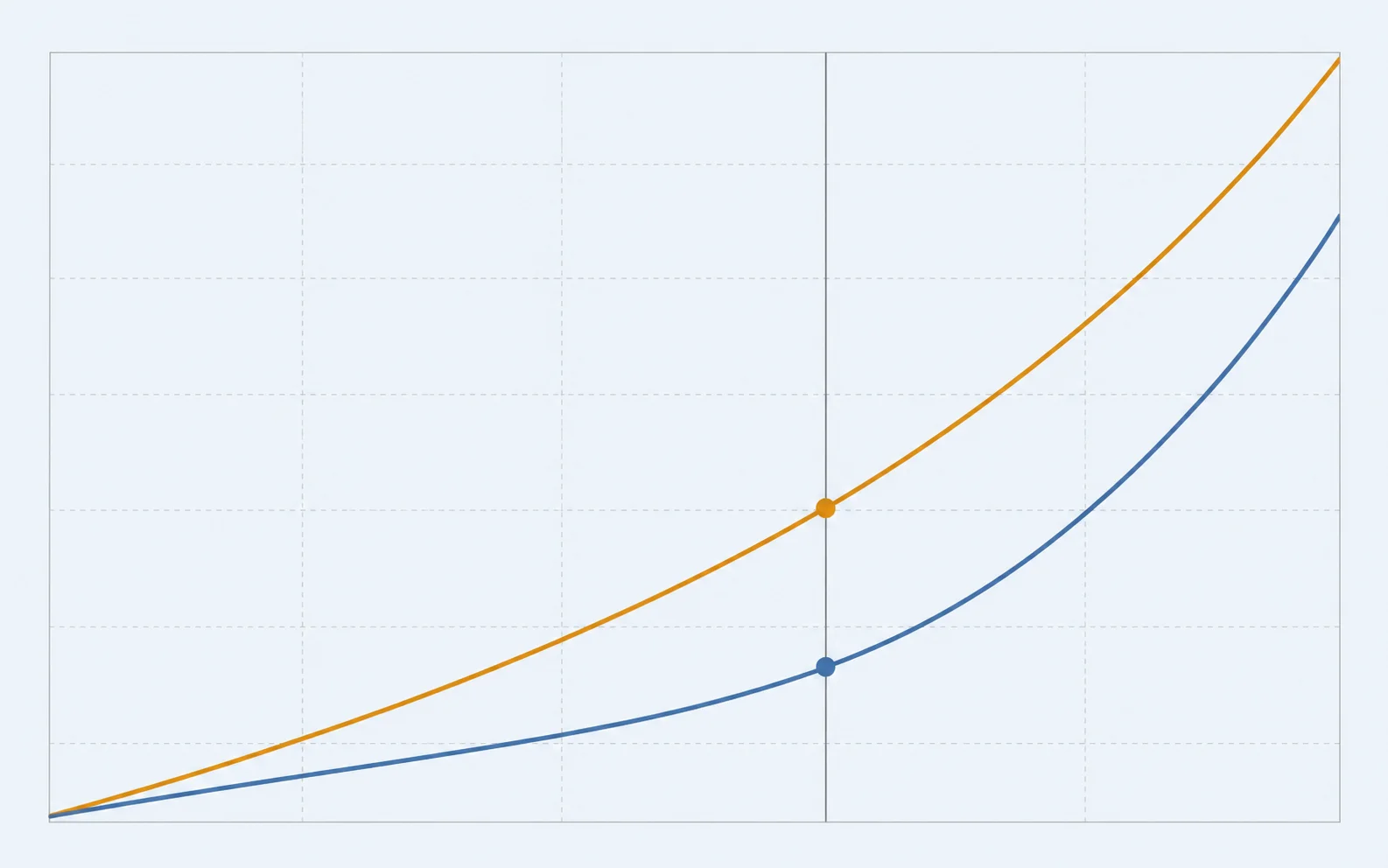
Correct sizing starts from the berthing energy of the design vessel — not from diameter alone — and then checks that the resulting reaction force and hull pressure stay inside the limits your hull and quay can accept. We size against the calculated berthing energy (typically following a PIANC-style method, where the inputs are vessel displacement, approach velocity, and the relevant mass/eccentricity/softness factors you provide) and then verify the reaction and hull-pressure rows against your structural constraints.
A useful illustration sits inside the tables above: at 50 kPa, the Ø3300×4500 unit absorbs more energy than the Ø2500×5500 (1175 vs 943 kJ) while producing a lower reaction force (1884 vs 2019 kN). A larger diameter, in other words, often buys more energy at a gentler reaction — though hull pressure is a separate check and does not always fall with diameter, so it has to be read off its own column rather than inferred.
The two selection errors we correct before quoting. First, selecting on length or footprint alone is a recurring procurement error — a larger diameter often delivers more energy at a gentler reaction, so footprint is the wrong basis. Second, defaulting to Pneumatic 80 kPa on the assumption that higher pressure is always “safer”: higher initial pressure raises both reaction force and hull pressure for the same size, so on pressure-sensitive hulls Pneumatic 80 kPa can push hull pressure past an allowable limit that Pneumatic 50 kPa would have satisfied. We confirm which class applies once we have your vessel data and any hull-pressure cap.
Not sure whether Pneumatic 50 kPa or 80 kPa fits your hull?
Tell us your hull-pressure limit and we confirm the class before you commit to a size.
Where a Sling Pneumatic Fender Is Not the Right Choice
A sling fender is the wrong specification for several common cases, and naming them up front avoids a mis-buy. Consider an alternative when any of the following apply — we will say so during scoping if your case falls into one of these, because we would rather redirect the specification than ship a fender that under-serves the berth.
Permanent, maintenance-free floating protection
At a fixed berth, a non-air foam filled fender avoids pressure monitoring and the consequences of a puncture.
Heavy abrasion against rough quay faces
Against piled, rock-armoured or rough walls, the net-protected type on our pneumatic fender range resists chafe better than a bare sling cover.
Submarine or low-freeboard naval hulls
Waterline protection needs a partially water-filled submarine fender (hydro-pneumatic) engineered for that draught range; a standard sling unit is not.
Fixed quay-wall fendering
Where the reaction point never moves, moulded rubber fenders are usually the more economical permanent solution than a floating air fender.
Standards, Certification & Quality Verification for Sling Pneumatic Fenders
Every sling pneumatic fender we supply is manufactured and tested to ISO 17357-1:2014, the standard for high-pressure floating pneumatic rubber fenders, covering materials, dimensions, and the performance and inspection procedures behind the GEA and reaction figures above. Manufacturing is in-house, and we export internationally, so we align test documentation and packing with the destination requirements you specify.
ISO 17357-1:2014 build & test
Materials, dimensions, and the performance and inspection procedures that produce the GEA, reaction, and hull-pressure values in the tables above.
Certifications confirmed to scope
Our certifications are current and available on request; we confirm which approvals apply to your scope and market rather than publishing a generic list.
Export documentation & packing
In-house manufacture and international export, with test documentation and packing — fenders typically ship vacuum-folded to reduce freight — aligned to your destination.
How we present certification. We confirm which approvals apply to your scope and market rather than asserting a generic list we cannot tie to your order; certifications are current and available on request. Tell us your destination market and we align the test report and packing to it.
Need test documentation aligned to your market?
Share the destination and scope — we confirm the certification that applies, then quote.
Frequently Asked Questions
What is the difference between a sling type and a chain-tyre net pneumatic fender?
Both use the same air-cushion body and ISO 17357-1:2014 performance classes; the sling type omits the external chain-tyre net and uses end lifting eyes instead, making it lighter and faster to redeploy but less protected against abrasion on rough quay faces. Choose net-type for high-chafe fixed positions and sling-type for STS and frequently repositioned berthing.
Should I choose Pneumatic 50 kPa or Pneumatic 80 kPa?
Pneumatic 80 kPa absorbs more energy per size but raises reaction force and hull pressure; Pneumatic 50 kPa is preferred where the hull or structure has a lower allowable pressure. We confirm the class once your vessel data and any hull-pressure limit are known.
Is a sling pneumatic fender suitable for submarines?
No — submarines require a partially water-filled hydro-pneumatic unit (see the submarine fender page) sized to the draught range; a standard high-pressure sling fender is not designed for that waterline case.
Does a larger diameter always mean a higher reaction force?
Not necessarily. As the tables show, a larger-diameter unit can deliver more energy absorption at a lower reaction force than a smaller-diameter, longer one — at 50 kPa the Ø3300×4500 absorbs 1175 kJ against 943 kJ for the Ø2500×5500, at a lower reaction. Hull pressure is a separate check and does not always move in the same direction, which is why sizing must work from berthing energy and pressure limits, not footprint.
Which fenders carry a safety valve?
Units of 2500 mm diameter and above are fitted with a safety valve as standard in our production specification.
What do you need from us to quote?
Design vessel displacement and approach velocity, berth type and geometry, any hull-pressure limit, internal-pressure class preference, and destination/market so we can confirm certification scope.
Send Your Vessel Data For a Sized Sling Fender
Specifying a sling pneumatic fender comes down to three variables your team controls: the berthing energy of the design vessel, the reaction force and hull pressure your hull and quay can accept, and whether the berth needs a redeployable floating fender at all rather than a foam, net-type, or fixed rubber alternative. The tables let you read GEA, reaction, and hull pressure straight off the size — but the right size is the one that satisfies all three constraints together.
We have manufactured marine fendering in Qingdao for close to 20 years, and the two errors we most often correct before production are the same: sizing on diameter or footprint instead of berthing energy, and defaulting to the higher pressure class without checking the hull-pressure limit. We verify both against your project data and confirm the suspension hardware ratings before anything is built.
What to send us
5 inputsYou get back: a size, the matching Pneumatic 50 kPa or 80 kPa figures, and the certification scope that applies — or a plain note redirecting you to a foam, net-type, submarine, or rubber alternative if a sling fender is the wrong call.