
Foam Filled Fenders for Berthing & Marina Protection
We manufacture foam filled fenders with a closed-cell foam core and an abrasion-resistant polyurethane skin — superior energy absorption at a low reaction force, with no internal air to maintain. Because the core is closed-cell, the fender keeps its buoyancy and goes on protecting even if the skin is punctured. The range covers sling type and tire-chain net mountings and the donut fender for monopile berths, in a wide choice of sizes and foam densities. We build to ISO 17357, size on the berthing energy, and have manufactured marine fenders in Qingdao since 2005.
The Foam Filled Fender Range
All three share the same closed-cell foam core and polyurethane skin; they differ in how they are mounted and where they fit. Sling type hangs on straps for temporary and ship-to-ship work; tire-chain net is wrapped for permanent, high-abrasion berths; the donut rides a monopile and follows the tide. Pick the mounting that matches your berth, then open its page for sizes and performance.
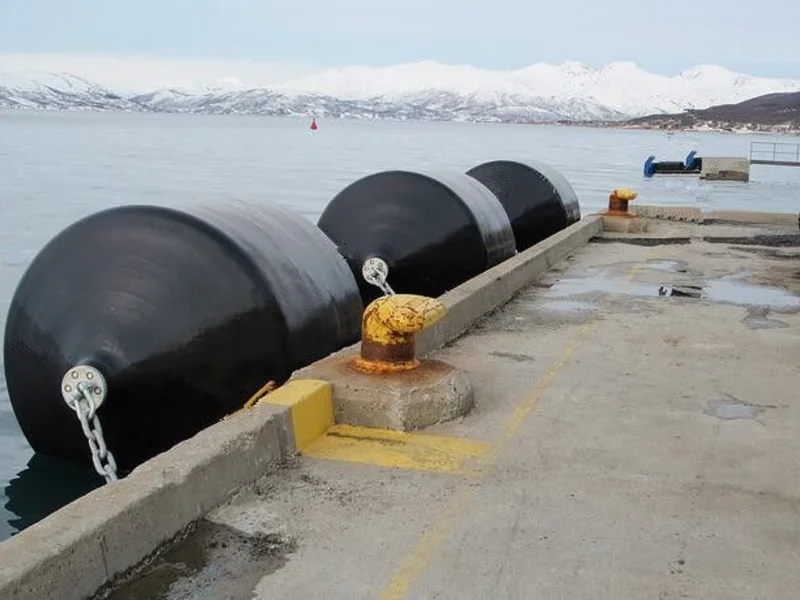
Sling Type Foam Filled Fender
Lifting straps on both sides and no steel structure, so it is light to ship and quick to deploy for temporary and ship-to-ship work.
Use when: you need a light, quick-to-move fender for STS or temporary berths.
View Sling Type Foam Filled Fender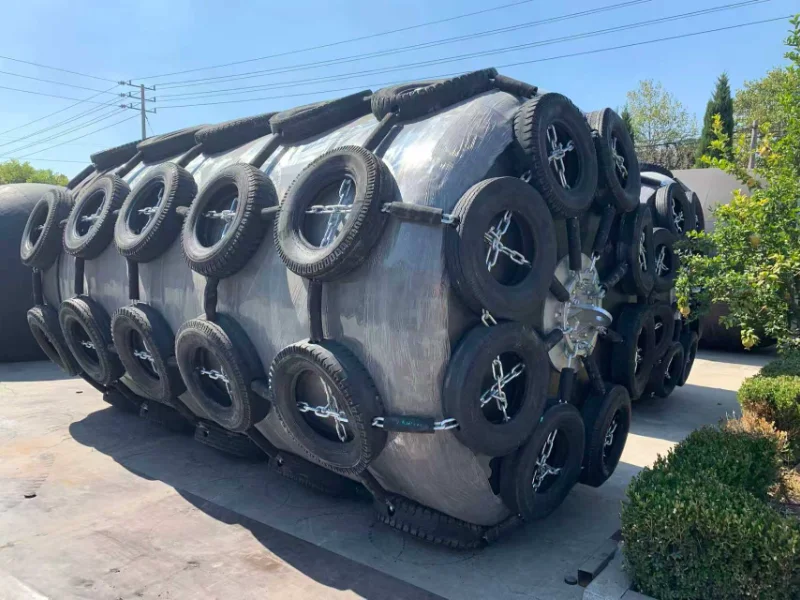
Tire Chain Net Foam Filled Fender
Wrapped in a chain-and-tire net casing for the abrasion of permanent, high-traffic berths, with damaged sections replaceable one at a time.
Use when: a permanent, high-traffic berth needs an abrasion-resistant casing.
View Tire Chain Net Foam Filled Fender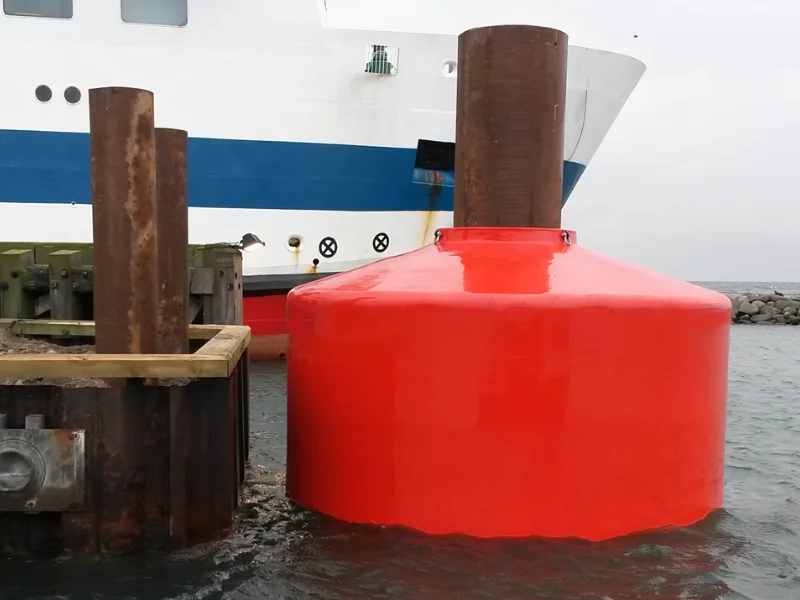
Donut Fenders
Ring fender that slides over a fixed monopile, floats up and down with the tide, and rotates 360° to follow the vessel and the approach angle.
Use when: the berth is built on a monopile with a large tidal range.
View Donut FendersWhich Foam Filled Fender for Your Berth?
The core and skin are the same; the choice is the mounting and the berth. The table compares the three on how they mount, what they suit, and how permanent they are; we then size the diameter and length to your berthing energy.
| Criterion | Sling Type | Tire Chain Net | Donut |
|---|---|---|---|
| Mounting | Lifting straps | Chain-and-tire net | Slides over a monopile |
| Service | Temporary / STS | Permanent / high-traffic | Tidal monopile berths |
| Casing | No steel, light | Net over the skin | Steel sleeve, UHMW-PE liner |
| Key strength | Quick to move | Abrasion resistance | Floats & rotates with tide |
| Typical berth | STS, breakdowns, temporary | Busy ports, harsh conditions | Ferry / LNG dolphins |
Quick routing. Light and quick to move → sling type. Permanent and high-abrasion → tire-chain net. Monopile berth with a big tidal range → donut. If you need a re-inflatable floating fender, a pneumatic fender fits better; for a fixed dock wall, use rubber fenders.
Not sure which foam fender fits?
Send the vessel, the berth, and the mounting — we recommend the type and size.
One Core Across the Range
Whatever the mounting, the fender is the same inside: a closed-cell foam core that absorbs energy at a low reaction and a reinforced polyurethane skin, sized on the real berth.
Closed-cell foam core
The core absorbs energy at a low reaction force and stays buoyant even when punctured, so the fender keeps working without internal air to maintain.
Reinforced polyurethane skin
A polyurethane outer layer with nylon-thread fabric reinforcement seals the core and resists seawater corrosion and abrasion, in a choice of foam densities.
Sized on the berth
We size on berthing energy, balancing energy absorption against reaction force and hull pressure, and pick the foam density and mounting for the duty.
Foam Filled Fenders — Frequently Asked Questions
What is the difference between sling type, tire-chain net, and donut fenders?
They share the same closed-cell foam core and skin but differ in mounting: sling type hangs on lifting straps and is light and quick to move; tire-chain net is wrapped in a chain-and-tire net for permanent, high-abrasion berths; the donut slides over a monopile and floats and rotates with the tide.
Why are foam filled fenders easier to use than inflatable fenders?
Because there is no internal air pressure to maintain. The closed-cell foam core does the work, so you avoid the pressure checks and top-ups an inflatable fender needs — you only confirm the skin is sound.
Will a foam filled fender sink if the skin is punctured?
No. The closed-cell EVA foam core provides buoyancy and resists water penetration, so even a punctured fender keeps floating and protecting. The polyurethane and nylon reinforcement seal the core against leakage and damage.
How are foam filled fenders sized?
On berthing energy, balancing energy absorption against reaction force and hull pressure. The closed-cell core comes in a range of foam densities, so we pick the density and size that meet your energy at an acceptable reaction.
What standard are they built to?
ISO 17357, the standard for floating fenders. We confirm which certifications apply to your scope on request rather than publishing a fixed certificate list.
Tell us the berth — we pick the foam fender
Not sure whether you need a sling type, tire-chain net, or donut fender? Send us the vessel, the berth, and the mounting and we recommend the type, size, and foam density — sized on your berthing energy.
What to send us
5 inputsYou get back: a recommended foam fender type, size, and density for your berth, with a link to the exact product page and its performance basis.